
Spark In The Dark
Solstice, Rest, Ignition, Resistance

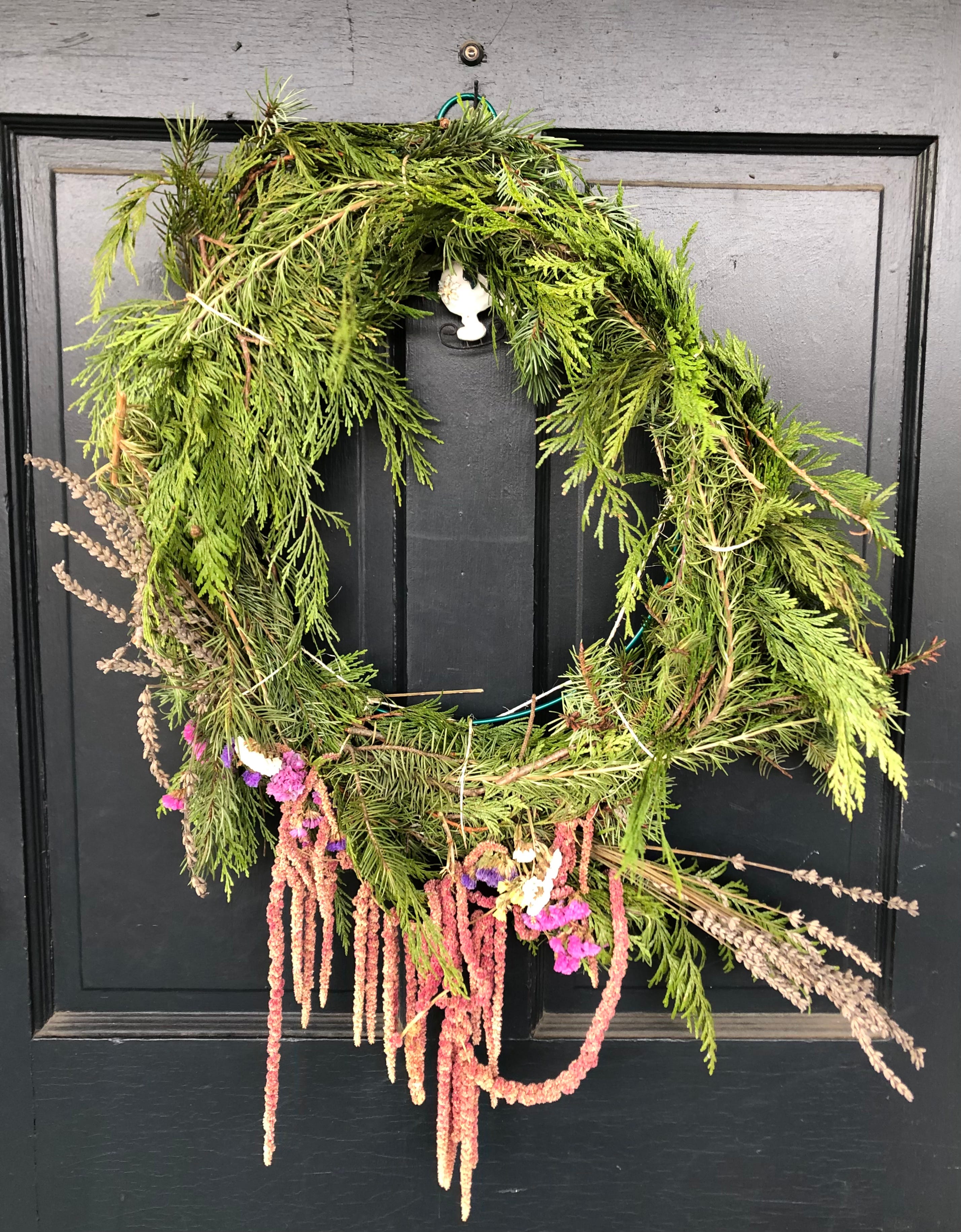
Announcements: We raised $200 for the Western Alaska Disaster Relief Fund through zine sales at the Holiday Party Art Show, as well as $55 for PIRC, Portland Immigrant Rights Coalition. We had a beautiful time and sold out of calendars! We made more! Reach out if you would like the 2025 Art of George Wilson calendar for $25 ($20 cash.) Umbrellas in the Shitstorm potluck our house Thursday, January 15, 5-9 pm. Imbolc Stir the Pot Wednesday, January 28 6:30-8:30 at Leaven Community Center in the Seashell Room. 2025 Fisher Poets Gathering February 27-March 1, Astoria, Ore. I’ll be performing at the Connecticut Sea Music Festival June 12-14 in Essex, Conn.
Any day that starts with Bill Withers singing “Lovely Day” is a good one, and when I finally got all the way into the car yesterday morning after returning twice into the house to collect forgotten items, I almost wept when his honeyed voice poured out of the radio. I recently became something of a KMHD disciple, the djs on the tiny nonprofit radio station out of Gresham—Portland’s oft-scorned little sister suburb—speak through music, addressing our current experience of the oligarchy’s inhumanity to humanity. I can almost hear staff meetings addressing the terrors of today: rather than ranting, the radio programs hours of music by immigrants, Black people, women, all vulnerable people, and consistently wishes everyone a lovely day. Its motto, “Jazz Without Boundaries,” feels to me like a safe sonic space, unless of course, you loathe jazz.
This morning, dj Allen “The Ambassador” Thayer played the Studio Rio version of “Lovely Day”, a 2014 project by a couple of German brothers, Chris and Frank Beermann, who laid Brazilian beats behind jazz classics. I am especially fond of Bill Withers, not just for his gorgeous voice but for the deep compassionate messages of his songs and the metal lunchbox he carries on the cover of his first album. A nine-year Navy veteran, Bill worked in a factory by day and performed nightly in clubs, shopping demo tapes around; his cultural influence is enormous. He is the author of “Lean On Me,” which I have heard sung by choirs both on the street and in concert environments, as well as “Grandma’s Hands,” “Ain’t No Sunshine,” and “Just the Two Of Us.” Bill Withers has given us tools of great power in our resistance to despair: an acknowledgement that while unnecessary suffering is woven through our everyday lives, we do better together, and care is a legacy that costs nothing and can be passed down.
I made tempeh last week, to my great surprise and delight. The fickle state of my digestion continues, so cheap food like beans remain off the menu. Tempeh is a fermented soybean product originating in Indonesia, perhaps as early as the 12th century; fermented items like kim chi and tempeh are more supportive of whatever my gut is doing. It’s cheap to make and expensive in the store; when I got an impromptu invitation to help with the project, I indulged my curiosity, despite the eight hours I had already worked in the warehouse. The beans had been soaking a while; the first task was to drain the water and vigorously rub the tiny yellow crescents in a towel or between my hands to remove as many of the tough outer skins as possible, while managing reasonable expectations1. Then the beans went on the boil for less than an hour. We skimmed off the foam and the hulls that floated to the top, then had a short hot tub break during the boiling; we talked about quitting drinking, how patriarchy twists us, and other life musings, trading stories during a break in the heavy rains that have lately hammered the whole Pacific Northwest. For the next step we strained the beans into a huge metal bowl, a perfect bowl, deeper than the usual ones from the chef store,2 and I watched my friend carefully measure out a teaspoon of a mold culture and stir it into the beans.
My friend is a good teacher; I appreciated their clear, step-by-step explanation despite the lateness of the hour and it being the last day of a long work week for us both. We divided the beans in to roughly equal portions and packed them into quart-size ziplock baggies, removed as much air from the baggie as we could, then laid them on the counter, patting the mass into a flattish shape. Using a fork, we poked holes through the baggies on both sides, then set them on an oven rack. Optimal temperature for tempeh fermentation is around 80º3, which some practical genius found could be easily achieved by turning on an oven light. Then I rode my bike five miles home in the pouring rain, happy. The next day I got a photo of the tempeh from my friend; our work was fruitful, the mold was doing its thing, weaving the beans together into a meaty mass with a mild nutty flavor4. The day after that I almost ran into my friend who rode over to drop the tempeh; as I pelted out the back gate on my bike to pick up my car from the mechanic, they waved their hands to identify themself, and—correctly reading the huge hurry I was in—hollered that they would leave my tempeh on the porch.
It’s solstice time. Officially the astronomical point of the winter solstice occurred around 7 am 12/21, but the night from which we all just awoke is the longest for the planetary year; sunset today will be a few minutes later. Our bodies want to rest. Less sunshine means less available energy for life in the northern hemisphere, yet here we are rushing around preparing for one of the busiest times of the year. At the hospital we are tearing through the flu supplies; my friend’s retail job leaves them grumpy and exhausted. Everywhere cheap decorations push a festive atmosphere. At my job we each have a fake fur red and white stocking hung on the wall of the office, with our names written in green-colored sparkly glue, in cursive. Grown adults, we will find candy in there after the 25th rather than things we actually need, like more time off or shoes that help us manage the impact of walking around on concrete for eight to ten hours.
I put on blinders, selectively engaging. I like going to my friends’ houses. We had a gorgeous party and sold out of a first run of calendars. Colored lights in the darkness do something nice to my brain. I don’t want to be a grinch, and I resent being at war with my body’s requests on behalf of empire. My usual holiday complaints are exacerbated by kicking off the holiday season with my dad’s funeral at Hallowe’en. I have had even less rest than usual. I tuned into WFMU’s excellent show Transpacific Sound Paradise5 “popular and unpopular music from around the world” and when I heard a version of “Feliz Navidad” my heart broke, thinking of people trying to create a Christmas for children while also having to worry that they might get snatched while buying fake fur stockings and Abuelita chocolate para mesa, Mexican hot chocolate.
Friends from around the country are in touch, reach out when ICE raids hit them, but I am hearing that locals have organized into effective response teams. During the most recent raid reported to me—conducted during shopping season in bad weather—the kidnappers were unsuccessful, and everyone gets to plan Christmas one more day. Vulnerable people tell me their personal stories of growing up with this threat their whole lives; it reminds me of being on the front lines confronting homophobia and misogyny in Chicago, in the 90s, when a person could lose housing or job if a landlord or employer learned of a positive AIDS test. It reminds me of all the ways people organized to keep testing confidential. All the ways people had to hide in plain sight as we lived as much of our lives as we dared. I recently had a conversation with a young security guard who works near where I live, he told me he’s been listening a lot to “Michael…something? Wham?” We talked about George Michael, how much I love him, what a good dancer he was. The guard loves 90s music, he asked me what it was that made that music so special. I reminded him that George Michael was gay, and that he played for all of us who were drowning in an epidemic that the president refused to even name. I told him that we used to march in the streets while people screamed hate at us, then go dancing to “Careless Whisper,” how dancing together saved us, we went sometimes three nights a week in the winter time. The guard told me about his girlfriend, she is an immigrant; their love is wrapped around their safety. He has feared being snatched his entire life. Sometimes he gestures to his dark eyes, black hair, his face, his Spanish name velcroed to his bulletproof vest, talking about being afraid to respond to certain situations. “Just one wrong word from me, if someone gets angry, they take me, you know?”
When I talk with peers about the current situation, I notice deep negativity in my male-socialized friends, a grimness that rises from knowledge of history, close study of atrocity. I notice how I avoid the conversations, not because I am in the clouds pondering what Amazon trinket I can stuff in my fake fur stocking, but because I am—like everyone—struggling daily against my body’s constant request to stop and sink into the nourishing dark. Pushing against the tide of the planet is hard. Studies show that human brains generate a magnetic field, and when we are close enough to talk to each other, our fields mingle, and can impact and influence each other. Talking to the young security guard about his lived experiences is sad, but helps me feel closer to his experience. Hearing deep negativity from a fellow battle-scarred veteran of our thirty year struggle to create decent working and living conditions in a country stuffed with fat cats and gorgeous resources makes me feel physically awful. I love my comrades, and I can’t do that piece anymore. I can’t start conversations with old friends that immediately turn sardonic.
Subversion through friendliness sounds like cotton candy, I think sometimes. I believe it’s deeply subversive to manage the vast history of man’s inhumanity to all humans; I think it’s important to recognize the role of the patriarchy in that. I believe that the more radical act is to take all that knowledge of how precisely we are fucked, and learn how to make something. Empire always loses, even though the streets may run for a time with our blood, or the the blood of others, while our ancestral memories rise up and remind us of that time that it was “our” people on the line.
I notice my friends who are not male-socialized, or who have resocialized themselves out of the culture’s indoctrination of performing masculinity. They sing in choirs. They make dance videos before sewing art that uplifts Palestine and holds the pain of Gaza. They deepen their understandings of their vocations with continuing education. They make estrogen and contingency plans for vulnerable trans people. They hunt deer and give the meat away. They show up in cute outfits and help out, while passing around strategies for resisting ICE. They facilitate conferences, navigating as a third-gendered person the difficult gaps between generations, with love, logic, and humor. They crisscross the country playing magic transwoman improv guitar and hold space for trans newbies in landlocked red states. They vent, but they do not make a personality out of their woes. They listen. They have potlucks with vast amounts of food and trust us with their families.
I have a lot of love and compassion for men, as well as a brotherly feeling—to the degree that I am allowed. I enjoy men. As a kid, I did not want to be a woman. I wanted to be named Luke, or Nathan, and have adventures rather than children. I have worked alongside straight, cis, heteronormative men most of my life: fishing, on job sites doing construction, electrical, plumbing, pouring cement, roofing, moving. I painted houses. Now, the warehouse. I see people who are crippled at a young age—4, 5, 6 years old—forced to choose between their own human experience of being a full emotional being, or avoiding severe persecution and accepting the assignment of maleness, thereby gaining access to the privileges it brings. Often this results in a lifetime of wrestling with that choice that ends in addiction—to drugs (alcohol, sugar, uppers, downers, psychedelics) the phone, gambling, gaming, or the culture’s favorite, rage. Or depression, which was once described to me as ‘anger turned toward oneself.’
Listening to Bill Withers on the way to my factory-like job with my tempeh lunch, I was struck by the metaphorical perfection of making tempeh. First, be a little bean. Then be soaked in all your life experiences while growing a tough little protective hull. Next, enter a state of intentional transformation, allowing the hull to be removed through a rigorous practice involving others, something impossible to do alone. Stew in that with others, skimming off resentment, bitterness, survival adaptations (like chronic negativity or addiction or overfunctioning) that once worked but no longer support. Introduce a culture that promotes mycelial connection and rest a while, at an even temperature. Become nutritious. Participate in delightful exchange. Be consumed. Transform while nourishing others.
We each carry a spark, our birthright as beings of this gorgeous planet. Today on the solstice, I invite us to consider our spark: what is it? How do we carry it? When we bring our sparks together, does mine douse or raise the collective flame? How can my one spark ignite others, or at least hold steady among others? How can we be the mold culture that weaves us into resistance? If all that happens for resistance today is not complaining to a woman, a queer person, anyone Black, Indigenous, Latinx, Muslim or otherwise vulnerable, that spark is held with integrity. If that complaint goes into a journal or is processed with another male-socialized person, creates a practice of holding space together to resocialize, rekindle an emotional body, open a crossroads of emotional possibility—that is resistance.
We have been conditioned by capitalism to be outcome-oriented, to have something to show for ourselves, to leave a legacy, to prove we were here and ‘made a difference.’ We are conditioned to believe we are not enough. Capitalism lavishes scarcity anywhere it can but the earth, the earth she gives us everything we need.
Our ancient ancestors did not take the sun for granted. We did not know if there would be sun again, we lived with uncertainty, and cared for each other. We were all the things humans are, including awful and transcendent. But mostly we cared for each other.
Grandma’s hands used to hand me piece of candy.
Grandma’s hands picked me up each time I fell.
Grandma’s hands, boy they really came in handy
She’d say, “Mattie don’t you whip that boy.
What you want to spank him for?
He didn’t drop no apple core
—Bill Withers, “Grandma’s Hands”
It requires a tremendous amount of faith to live in resistance, and as white people, we are out of practice. Let’s look to our ancestors who lived through empire in targeted, vulnerable bodies to create a faith that can sustain us. A faith that understands that Empire will silence, steal, maim, kill some of us, and try to convince the rest of us to comply lest we suffer similarly. A faith that shares hope and stories widely and keeps secrets deeply. A faith that humans are built for connection and compassion, that we are part of the great web of live this planet has been long in weaving, a faith that everything alive is on our side.
I’m going to tap into Bill Withers some more today, and also George Michael. But it’s humanity’s great hero Freddie Mercury, queer Persian-British king of learning and showing the way forward while squarely in the public eye during the worst, most festering decades of the AIDS epidemic whose words I carry always in my heart. And if I start singing it suddenly while we are talking at some holiday event, it’s as a shield against indoctrinated negativity. Because the whole human race and I ain’t gonna lose, and I mean to go on and on and on and on, even if it’s as beautiful post-human compost, or ash from flame from spark.
I′ve paid my dues time after time
I’ve done my sentence but committed no crime
And bad mistakes, I′ve made a few
I’ve had my share of sand kicked in my face
But I’ve come through
And we mean to go on, and on, and on, and on
We are the champions, my friends
And we′ll keep on fighting till the end
We are the champions, we are the champions
No time for losers, ′cause we are the champions of the world
I’ve taken my bows and my curtain calls
You brought me fame and fortune
And everything that goes with it, I thank you all
But it′s been no bed of roses, no pleasure cruise
I consider it a challenge before
The whole human race and I ain’t gonna lose
And we mean to go on, and on, and on and on
We are the champions, my friends
And we′ll keep on fighting till the end
We are the champions, we are the champions
No time for losers, ‘cause we are the champions of the world
Keep the light on. You gotta have faith. Lean on me, let me lean on you. Reach out, reach in, reach through. Stay friendly.
tips on this process are welcome. I was told, ‘we can’t get them all so do you best.’
I’ve never seen one like it; I am envious.
ish. I’ve also read 86º.
If it doesn’t work, I have read, the beans turn into a stinky, slimy mess
The show is great, including selections from the Klezmonauts ‘Oy To The World’ and Mick Moloney and Athena Tergis doing “The Bushes of Jerusalem” highlighting the state persecution of King Herod.
Woof, I really relate to "struggling daily against my body’s constant request to stop and sink into the nourishing dark"
(and I have both successfully and unsuccessfully made tempeh, and when it fails it is ASTONISHINGLY gross and stinky... not sure what that does for the metaphor, but sometimes it's like that.)
Thank you for that solstice share. Be like tempeh! I love reading your words. Continuing to read after I really should be getting up out of bed felt like staying in the bath a little extra long. Cause I’m just not ready to get out yet. Feels soothing to be in a place you relate to.